
"How long is this going to take?" is the first question most Atlanta homeowners ask after a water damage event. The honest answer is: it depends — but most restoration projects follow a predictable timeline that you can plan around.
This guide gives you a realistic picture of the water damage restoration timeline in Atlanta, what factors affect how long the process takes, and what you can do to keep things moving efficiently.
Water Damage Restoration Timeline Overview
Phase 1: Emergency Response and Water Extraction (Hours 1–8)
The restoration process begins the moment our team arrives — typically within 60 minutes of your call. The first priority is stopping the water source if it is still active, followed immediately by moisture mapping and water extraction.
Moisture mapping with thermal imaging cameras and professional moisture meters identifies all areas affected by water — including hidden moisture in walls, under flooring, and in ceiling cavities. This step is critical because water migrates rapidly through structural materials, and missing hidden moisture leads to mold growth and structural damage that becomes apparent weeks later.
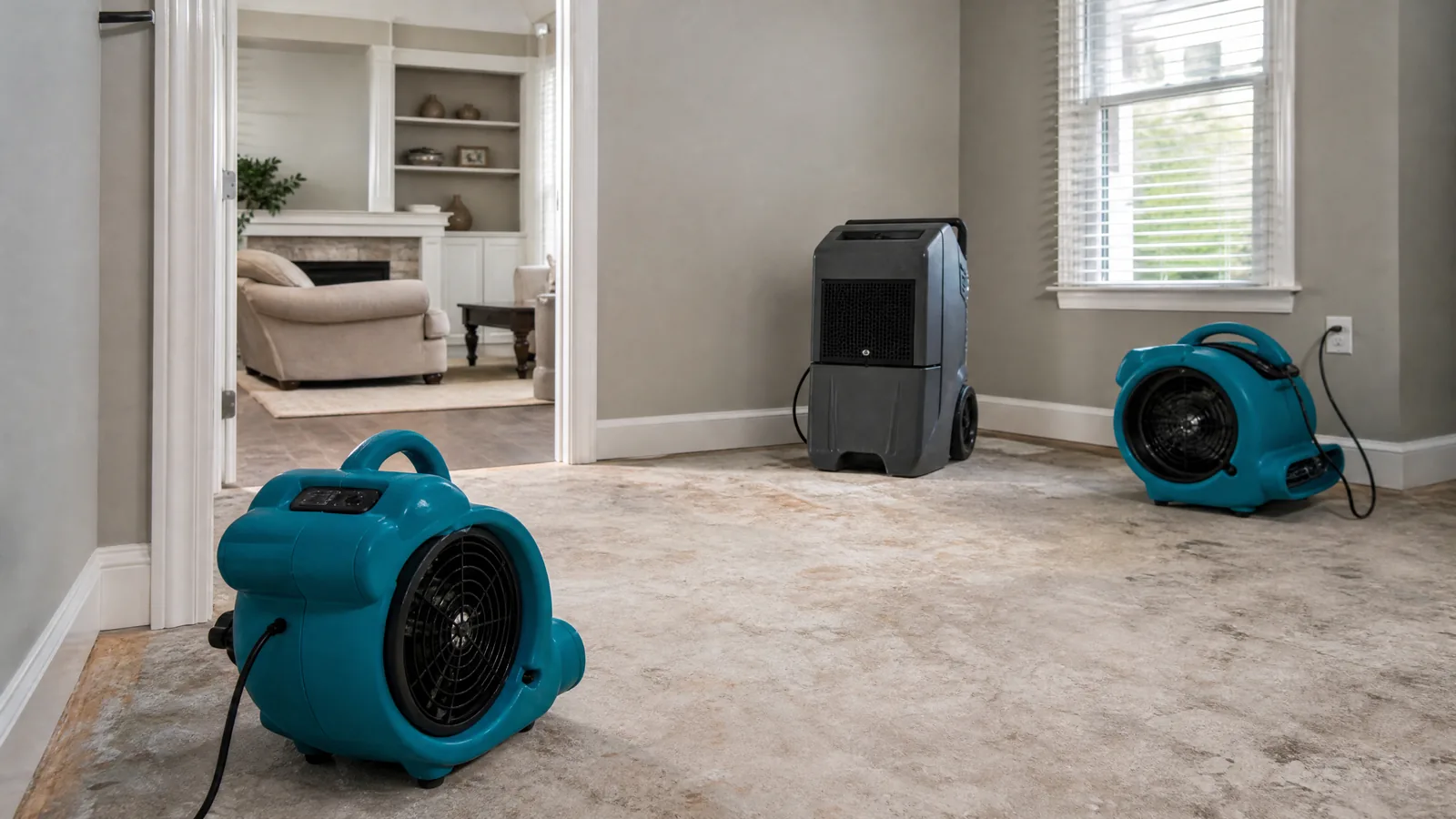
Water extraction with truck-mounted equipment typically takes 2–6 hours depending on the volume of water and the size of the affected area. Once extraction is complete, industrial dehumidifiers and high-velocity air movers are deployed to begin structural drying.
Phase 2: Structural Drying (Days 1–5)
Structural drying is the longest phase of water damage restoration and the one that most affects the total project timeline. The goal is to remove moisture from all structural materials — drywall, wood framing, subfloor, insulation — until they reach the target moisture levels specified by IICRC S500 standards.
In Atlanta's climate, structural drying typically takes 3–5 days for standard materials. Several factors can extend this timeline:
- Material type: Concrete and masonry absorb water deeply and dry more slowly than wood or drywall — often 5–7 days or more.
- Ambient humidity: Atlanta's summer humidity (often 70–90%) slows evaporation. Professional dehumidification equipment overcomes this, but it takes longer than in drier climates.
- Depth of penetration: Water that has soaked into multiple layers of material — subfloor, joists, insulation — takes longer to dry than surface-level moisture.
- Delayed response: Every hour that water sits before extraction begins, it penetrates deeper into structural materials. A 12-hour delay can add 1–2 days to the drying timeline.
Our team returns daily to record moisture readings, adjust equipment placement, and confirm drying progress. Equipment is not removed until moisture levels meet IICRC clearance standards — not before, regardless of how the materials look or feel to the touch.
Phase 3: Repairs and Restoration (Days 5–14+)
Once structural drying is complete and clearance is achieved, the repair and restoration phase begins. The scope of repairs depends entirely on what was damaged — a minor water event affecting only drywall and carpet might require 1–3 days of repairs, while a major flooding event affecting multiple rooms, subfloor, and structural framing can take 2–4 weeks.
Common repairs after water damage include:
- Drywall replacement and finishing
- Flooring replacement (carpet, hardwood, tile, laminate)
- Insulation replacement
- Cabinet and millwork repair or replacement
- Painting and finish work
- Structural framing repair (in severe cases)
What Can Delay Water Damage Restoration?
The most common causes of extended restoration timelines in Atlanta are insurance-related delays. If your insurer requires pre-authorization before repairs can begin, or if there is a dispute about coverage, the repair phase can be delayed by days or weeks while the claim is resolved. Working with a restoration company that communicates proactively with your adjuster and provides thorough documentation helps minimize these delays.
Material availability can also affect timelines — particularly for specialty flooring, custom cabinetry, or materials that need to be ordered. Our team identifies these potential delays early and orders materials as soon as the scope of repairs is confirmed to minimize waiting time.
Can I Stay in My Home During Restoration?
For most water damage events, you can remain in your home during the drying phase — the equipment is noisy and the affected areas will be inaccessible, but the rest of your home is typically livable. Exceptions include: extensive damage that affects multiple rooms or essential systems (HVAC, kitchen, bathrooms), sewage contamination that requires biohazard protocols, and mold remediation that requires containment and air filtration.
If your home is uninhabitable during restoration, your homeowners insurance policy's "loss of use" or "additional living expenses" coverage typically pays for temporary housing. Check your policy or ask your adjuster about this coverage.
The Most Important Thing You Can Do: Call Immediately
Every hour of delay adds time and cost to your restoration. Water penetrates deeper into structural materials, mold risk increases, and the drying timeline extends. The single most effective thing you can do to shorten your restoration timeline is to call a professional restoration company immediately — before you start any cleanup yourself.
Frequently Asked Questions
How long does water damage restoration take?
Most water damage restoration projects take 3–7 days for the drying phase, plus 1–5 additional days for repairs. Total project duration from emergency response to final completion typically ranges from 5 days for minor events to 3–4 weeks for major flooding with significant structural damage.
How long does structural drying take after water damage?
Structural drying typically takes 3–5 days for standard materials like drywall and wood framing. Concrete and masonry take longer — often 5–7 days or more. In Atlanta's humid climate, drying times can be extended without professional dehumidification equipment.
Can I stay in my home during water damage restoration?
It depends on the extent of damage and the category of water. Minor water damage from a clean source in a limited area usually allows you to remain in your home. Extensive damage, sewage contamination, or mold may require temporary relocation.
What slows down water damage restoration?
The main factors that extend restoration timelines are: delayed response (allowing water to penetrate deeper), high ambient humidity (common in Atlanta summers), extensive structural damage requiring demolition and rebuild, and insurance claim disputes that delay authorization.