
Water damage is one of the most common homeowners insurance claims in Georgia — and also one of the most frequently underpaid. The difference between a claim that fully covers your restoration and one that leaves you out of pocket often comes down to how quickly you act and how thoroughly you document the damage.
This guide walks you through the exact steps to file a water damage insurance claim in Georgia, what your policy likely covers (and what it doesn't), and how to work effectively with your adjuster to ensure you receive the full benefit of your coverage.
Quick Reference: Water Damage Claim Steps
- Step 1: Stop the water source immediately
- Step 2: Document everything with photos and video before cleanup
- Step 3: Call your insurance company to report the claim
- Step 4: Call a professional restoration company
- Step 5: Secure the property against further damage
- Step 6: Meet with the insurance adjuster
- Step 7: Review the adjuster's estimate carefully
- Step 8: Complete restoration and close the claim
Step 1: Stop the Water Source
Before anything else, stop the water. If a pipe has burst, turn off the main water supply to your home. If the damage is from an appliance, turn off the appliance and its supply valve. If it's a roof leak, place buckets and move valuables out of the affected area. Stopping the source prevents additional damage and demonstrates to your insurer that you took reasonable steps to mitigate the loss — a requirement in virtually all Georgia homeowners policies.
Step 2: Document Everything Before Cleanup
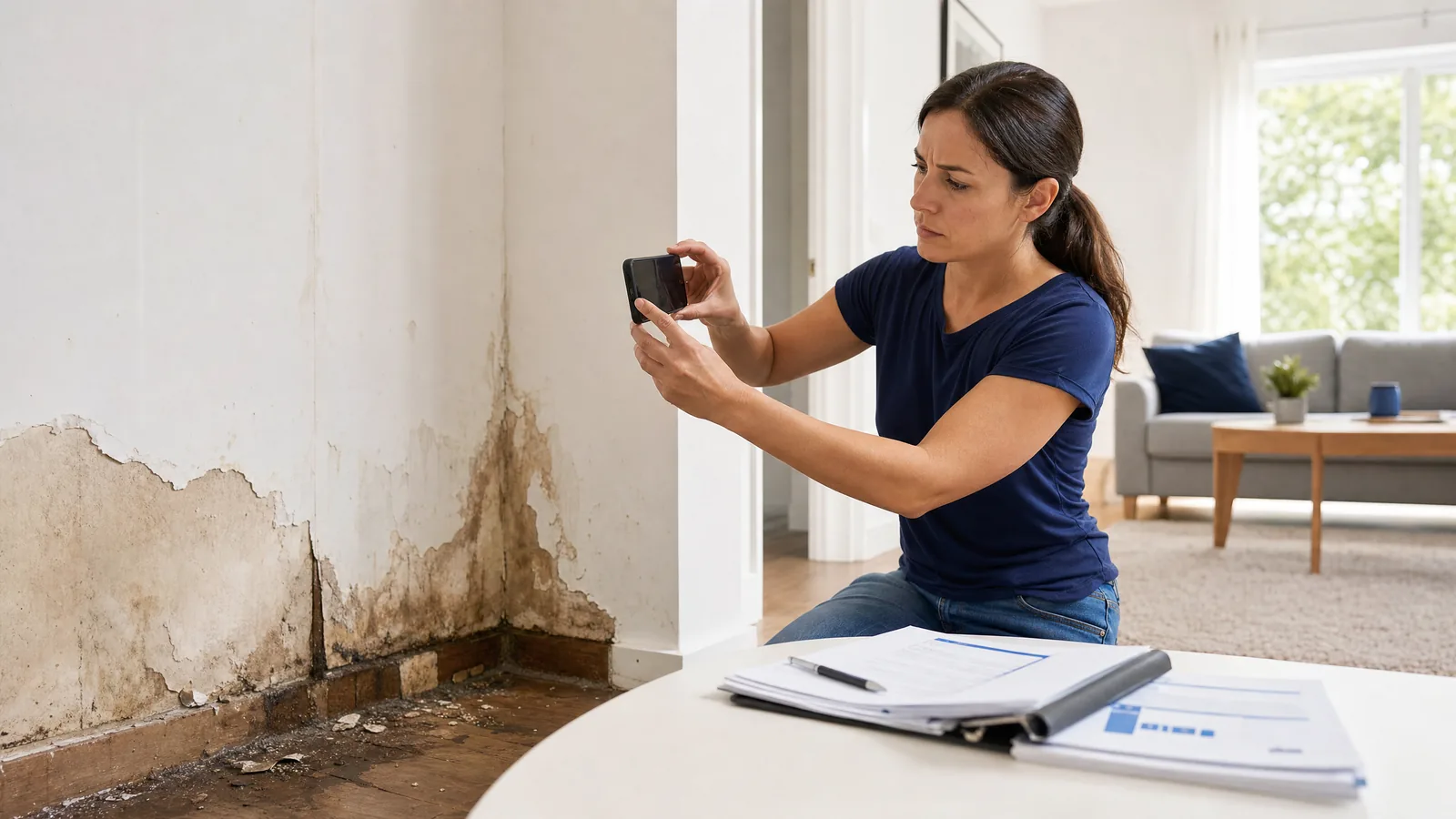
This is the step most homeowners skip — and it's the one that costs them the most money. Before you move anything, remove any water, or begin any cleanup, document the damage thoroughly with photos and video. Walk through every affected room. Photograph standing water, damaged walls and ceilings, affected flooring, damaged personal property, and the source of the water if visible.
Specifically document:
- The extent of standing water (use a ruler or tape measure for depth)
- All affected rooms and areas, including adjacent spaces that may have absorbed moisture
- Damaged structural elements — walls, ceilings, floors, cabinets
- Damaged personal property — furniture, electronics, clothing, appliances
- The source of the water damage if visible (broken pipe, failed appliance, etc.)
This documentation is your evidence. The more thorough it is, the stronger your claim.
Step 3: Report the Claim Promptly
Contact your insurance company as soon as possible after discovering the damage. Georgia insurance policies require prompt notification of losses, and most insurers expect contact within 24–72 hours. Delayed reporting can complicate your claim or give the insurer grounds to dispute coverage.
When you call, have the following ready:
- Your policy number
- The date and time the damage was discovered
- A brief description of the source and extent of damage
- Your contact information and the property address
The insurer will assign a claim number and an adjuster. Get the adjuster's name and direct contact information — you'll be communicating with them throughout the process.
Step 4: Call a Professional Restoration Company
Don't wait for the adjuster to arrive before beginning restoration. Most Georgia homeowners policies require you to take reasonable steps to prevent further damage — and standing water causes exponentially more damage the longer it sits. Mold can begin growing within 24–48 hours in Georgia's climate.
A professional water damage restoration company will:
- Extract all standing water and begin the drying process immediately
- Document all damage with professional moisture readings and photos
- Provide a detailed scope of work and cost estimate for your claim
- Communicate directly with your adjuster throughout the process
- Provide a final moisture clearance report confirming complete drying
This documentation from the restoration company is often more detailed and technically credible than what the homeowner can produce alone, and it significantly strengthens your claim.
What Georgia Homeowners Insurance Covers — and What It Doesn't
Understanding your coverage before the adjuster arrives prevents surprises. Standard Georgia homeowners policies (HO-3) typically cover:
- Burst or frozen pipes — one of the most common claims in Georgia
- Appliance failures — washing machine, dishwasher, water heater, refrigerator ice maker
- Accidental overflows — from sinks, bathtubs, or toilets
- Roof damage from a covered peril (storm, wind, hail) that allows water intrusion
- HVAC condensate overflow — in many policies, if sudden and accidental
Standard policies typically do not cover:
- Flooding from outside — requires a separate NFIP or private flood insurance policy
- Gradual leaks — a slow leak behind a wall that went undetected for months is typically excluded
- Sewer or drain backup — unless you have a specific sewer backup endorsement
- Neglect or deferred maintenance — damage from a roof that needed replacement years ago
- Mold from a pre-existing condition — though mold resulting from a covered water event is usually covered
Working With Your Insurance Adjuster
The adjuster's job is to assess the damage and determine what your policy covers. They work for the insurance company — not for you. That doesn't mean they're adversarial, but it does mean you should be prepared and informed.
When the adjuster visits:
- Have your documentation ready — photos, video, and the restoration company's scope of work
- Walk them through every affected area, including areas that may not be visually obvious
- Ask them to explain what is and isn't covered under your specific policy
- Get their estimate in writing before agreeing to anything
- If the estimate seems low, you have the right to dispute it or request a re-inspection
If you believe the adjuster has undervalued your claim, you can request a second opinion, hire a public adjuster (who works on your behalf for a percentage of the settlement), or invoke the appraisal clause in your policy, which provides a formal dispute resolution process.
Common Mistakes That Reduce Your Payout
Cleaning up before documenting: Once the water is gone and surfaces are dry, it's much harder to demonstrate the extent of damage. Always document before cleanup.
Throwing away damaged items: Keep damaged personal property until the adjuster has seen it. If you must dispose of something for health reasons (sewage-contaminated items, for example), photograph it thoroughly first.
Accepting the first estimate without review: The adjuster's initial estimate may not capture all damage, particularly hidden moisture damage in walls and under flooring. A professional restoration company's scope of work provides a useful comparison.
Delaying reporting: Prompt notification is a policy requirement. Delayed reporting gives the insurer grounds to dispute coverage or argue that additional damage resulted from your failure to act promptly.
Not understanding your deductible: Your deductible is the amount you pay before insurance kicks in. For a $2,000 claim with a $1,500 deductible, filing may not be worth the potential premium increase. Understand your deductible before deciding whether to file.
How Atlanta Water Damage Restoration Helps With Your Claim
We work directly with all major insurance carriers and have extensive experience navigating the claims process for Atlanta homeowners. When you call us after a water damage event, we don't just restore your property — we document everything in the format insurers expect, provide detailed scope of work and cost estimates, and communicate with your adjuster throughout the process.
Our goal is to make the claims process as straightforward as possible so you can focus on getting your home back to normal. If you have questions about your coverage or need help understanding what your policy covers, call us at (770) 284-6637 — we're happy to help, even before you decide to hire us.
Frequently Asked Questions
Does homeowners insurance cover water damage in Georgia?
Yes, most standard Georgia homeowners insurance policies (HO-3) cover sudden and accidental water damage from internal sources — burst pipes, appliance failures, and accidental overflows. They do not cover gradual leaks, flooding from outside the home, or damage from deferred maintenance.
How long do I have to file a water damage claim in Georgia?
Georgia insurance policies typically require you to report a claim "promptly" or within a "reasonable time" after the loss. Most insurers expect notification within 24–72 hours of discovery. Delayed reporting can complicate or void your claim.
Can a restoration company help me with my insurance claim?
Yes. A reputable water damage restoration company will document all damage thoroughly, provide detailed scope of work and cost estimates, and communicate directly with your adjuster throughout the process. This documentation is critical to receiving the full benefit of your coverage.
What is a public adjuster and should I use one?
A public adjuster is a licensed professional who represents policyholders in insurance claims — not the insurance company. They can be valuable for large, complex claims where the insurer's adjuster may undervalue the damage. They typically charge 10–15% of the claim settlement.