
When water floods your Atlanta home, the immediate priority is getting it out. But "getting the water out" is only the beginning of a multi-phase process. Understanding the distinction between emergency water removal and full water damage restoration will help you ask the right questions, set realistic expectations, and make sure you're not leaving your home vulnerable to hidden damage.
What Is Emergency Water Removal?
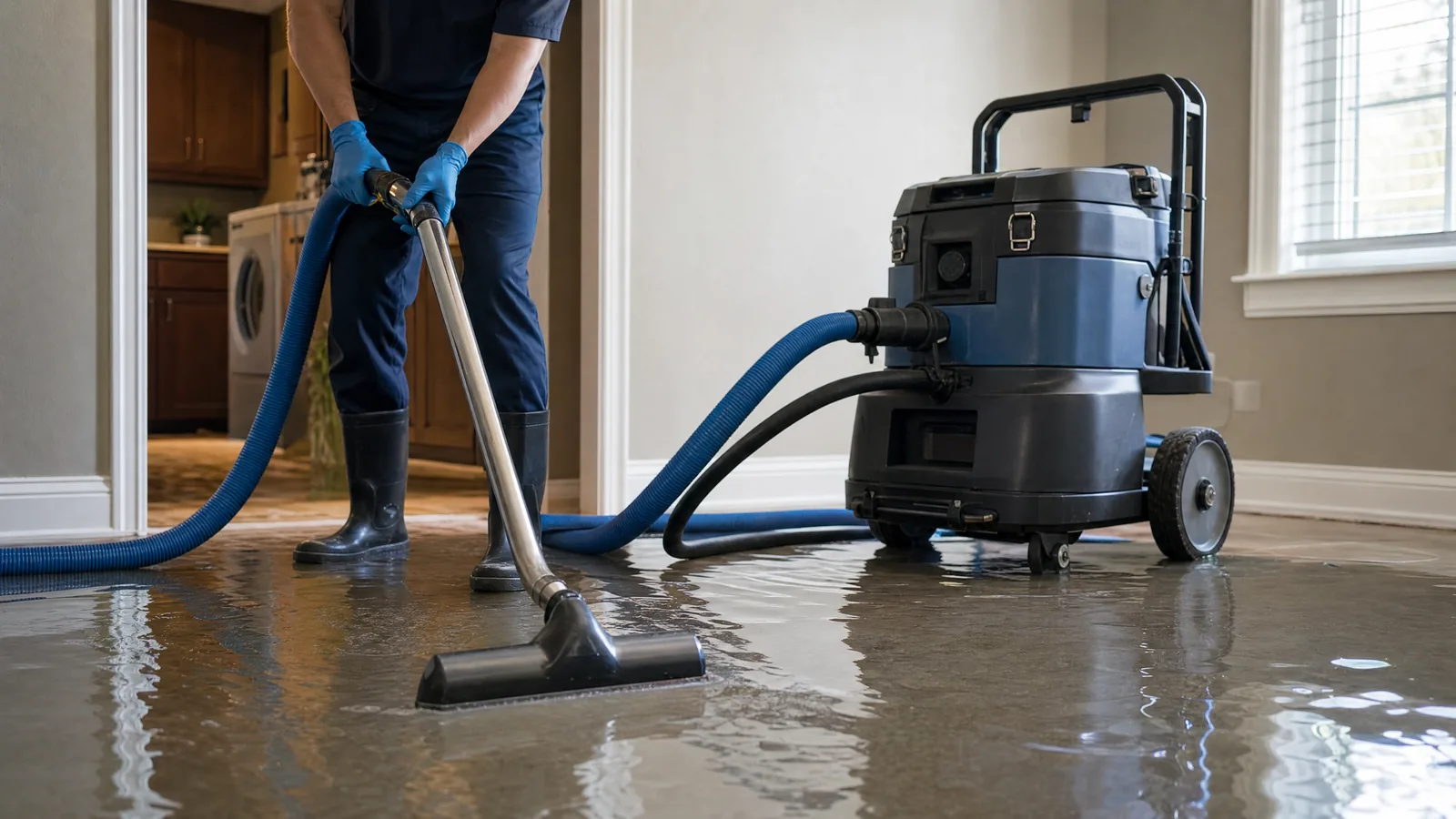
Emergency water removal — sometimes called water extraction — is the first phase of the response to a water damage event. It focuses on removing standing water from the property as quickly as possible using industrial-grade extraction equipment.
During emergency water removal, a certified technician will:
- Assess the source and extent of the water intrusion
- Classify the water category (clean, grey, or black water) to determine appropriate protocols
- Deploy truck-mounted or portable extraction units to remove standing water
- Extract water from carpet, padding, and hard flooring surfaces
- Perform initial moisture readings to map the extent of water migration
Emergency water removal can typically be completed in a matter of hours for most residential situations. The goal is to stop the active spread of water and remove the bulk of standing water before it causes additional damage or penetrates deeper into structural materials.
What Is Water Damage Restoration?
Water damage restoration is the complete process of returning your property to its pre-loss condition. It begins where emergency water removal ends and encompasses everything required to fully dry, clean, sanitize, and rebuild the affected areas.
Full water damage restoration typically includes:
Structural drying and dehumidification: Even after standing water is removed, significant moisture remains trapped in walls, floors, ceilings, and structural materials. Industrial air movers and dehumidifiers are deployed strategically throughout the affected area and run continuously — often for 3–5 days — to draw this moisture out. Moisture levels are monitored daily with calibrated meters to track drying progress.
Antimicrobial treatment: Affected surfaces are treated with EPA-registered antimicrobial agents to prevent mold and bacterial growth. This is especially critical for Category 2 and Category 3 water damage events.
Demolition of unsalvageable materials: Porous materials that cannot be effectively dried — saturated drywall, soaked insulation, compromised flooring — are removed to prevent mold growth and allow structural components to dry properly. This is often called "flood cuts" when referring to drywall removal.
Contents cleaning and restoration: Personal property, furniture, and belongings affected by the water are assessed, cleaned, and restored where possible.
Reconstruction: Once the structure is fully dry and cleared for rebuild, damaged materials are replaced — new drywall, flooring, insulation, cabinetry, and paint — returning the space to its pre-loss condition.
Why You Almost Always Need Both
A common and costly mistake Atlanta homeowners make is stopping after emergency water removal — assuming that once the visible water is gone, the problem is solved. It is not.
Water is extraordinarily effective at penetrating building materials. Within minutes of a flood event, water begins wicking into drywall, insulation, wood framing, and subfloor. Even after thorough extraction, these materials can retain moisture levels that are invisible to the naked eye but are sufficient to support mold growth within 24–48 hours.
In Atlanta's warm, humid climate, this risk is amplified. Mold spores are present in virtually every indoor environment — they only need moisture and a food source (organic building materials) to begin growing. A home that appears dry after extraction but has not undergone proper structural drying is a home that is likely to develop a mold problem within days.
The bottom line: emergency water removal stops the bleeding. Water damage restoration heals the wound.
Emergency Water Removal Services in Atlanta, GA
Atlanta Water Damage Restoration provides 24/7 emergency water removal services throughout metro Atlanta and surrounding communities including Marietta, Decatur, Sandy Springs, Alpharetta, Roswell, Smyrna, Kennesaw, and Peachtree City. Our emergency response teams are dispatched immediately upon your call and can typically arrive within 60 minutes.
Every emergency water removal call is followed by a complete moisture assessment and a detailed scope of work for full restoration — so you understand exactly what needs to happen next and why. We work directly with your insurance company and handle the documentation and communication on your behalf.
Frequently Asked Questions
What is the difference between water removal and water damage restoration?
Emergency water removal is the immediate extraction of standing water from a property. Water damage restoration is the complete process of returning the property to its pre-loss condition, which includes drying, dehumidification, cleaning, sanitizing, and rebuilding damaged materials.
How fast can emergency water removal services arrive in Atlanta?
Atlanta Water Damage Restoration maintains 24/7 emergency response teams throughout the metro area and can typically arrive within 60 minutes of your call.
Do I need both emergency water removal and full restoration?
In most cases, yes. Emergency water removal stops the immediate damage, but it does not address the moisture that has already been absorbed into walls, floors, and structural materials. Full restoration — including structural drying and dehumidification — is required to prevent mold growth and long-term structural damage.
Need emergency water removal in Atlanta right now? Call (770) 284-6637 — we dispatch 24/7 and arrive in 60 minutes or less.