
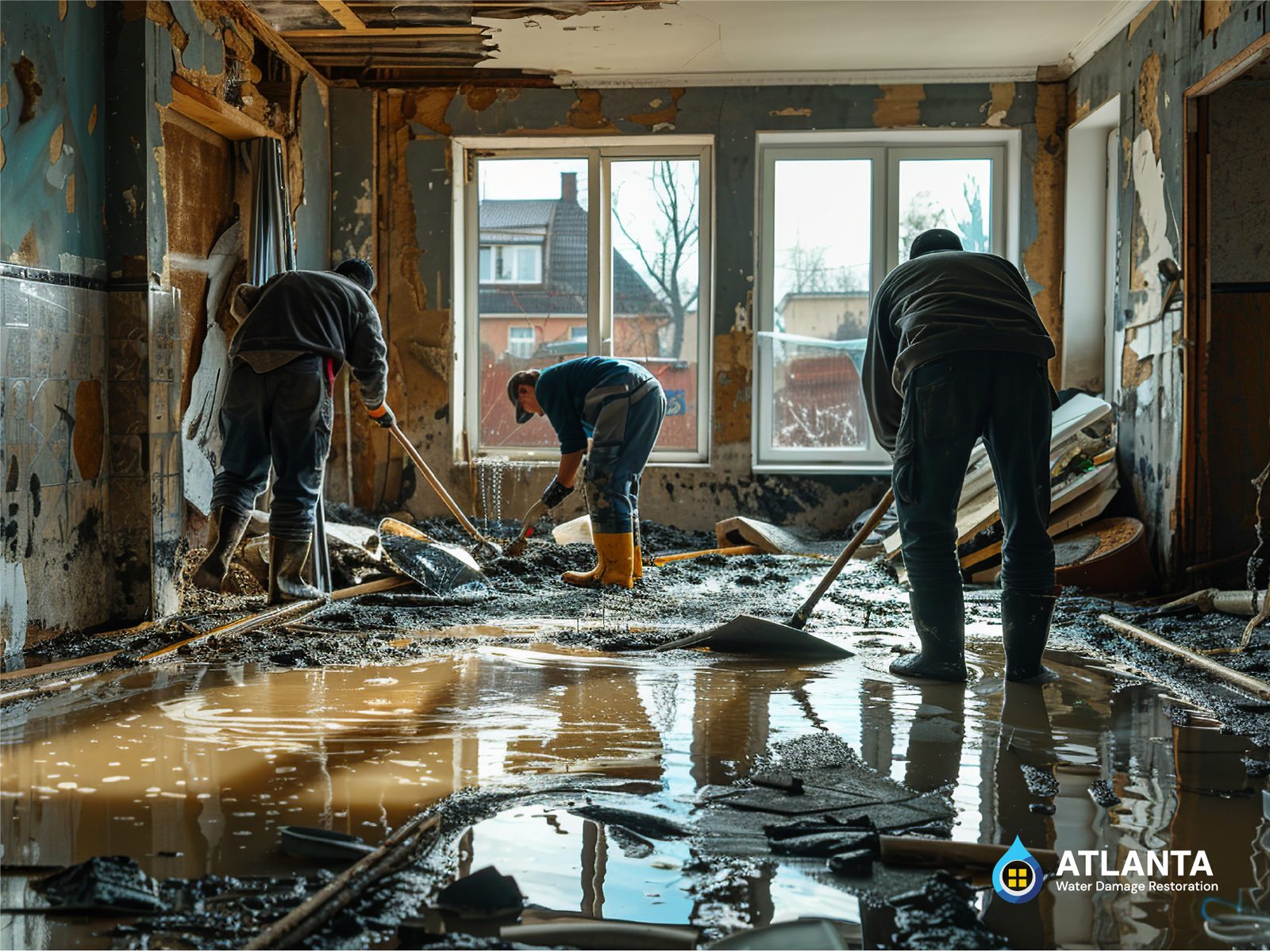
One of the most dangerous aspects of flooding and water damage is what you cannot see. Mold can establish itself deep within wall cavities, under flooring, in insulation, and in other concealed spaces — growing for weeks or months before any visible signs appear. By the time you see mold, the problem is often already significant.
In Atlanta's warm, humid climate, the conditions for mold growth are nearly always present after a water damage event. Understanding the warning signs of hidden mold can help you catch problems early — before they become serious health hazards and costly remediation projects.
Why Mold Hides After Flooding
When a home floods, water doesn't just sit on the surface — it penetrates into every porous material it contacts. Drywall, insulation, wood framing, carpet padding, and subfloor materials all absorb water rapidly. Even after the visible water is removed, these materials can retain significant moisture for weeks if not professionally dried.
This retained moisture creates ideal conditions for mold growth in concealed spaces. The interior of a wall cavity — dark, warm, and now moist — is a perfect mold habitat. Without professional moisture monitoring and drying, mold can establish itself in these hidden spaces and spread extensively before any surface signs appear.
Warning Sign #1: Persistent Musty Odor
The most reliable early indicator of hidden mold is a persistent musty, earthy odor — often described as smelling like wet cardboard, old books, or a damp basement. This odor is caused by microbial volatile organic compounds (MVOCs) produced by mold as it metabolizes organic materials.
If you notice a musty smell in your home after a flooding or water damage event — particularly in areas that were affected by water — take it seriously. The smell may be strongest near walls, floors, or ceilings in the affected area. It may also be more noticeable when your HVAC system is running, as the system can distribute mold spores and their associated odors throughout the home.
Importantly, the absence of a musty odor does not mean mold is not present. Some mold species produce little to no odor, and mold in very confined spaces may not produce detectable odors until the colony becomes large.
Warning Sign #2: Unexplained Health Symptoms
Mold exposure can cause a range of health effects, and unexplained symptoms that improve when you leave your home are a significant red flag. Common mold-related health symptoms include:
- Persistent nasal congestion, runny nose, or sneezing
- Itchy, watery, or red eyes
- Skin irritation or rashes
- Coughing or wheezing, particularly in individuals with asthma
- Headaches that occur primarily at home
- Fatigue or difficulty concentrating
- Throat irritation
If you or family members are experiencing these symptoms and they improve when you leave the house, mold exposure is a likely cause. Children, elderly individuals, and those with respiratory conditions or compromised immune systems are particularly susceptible to mold-related health effects.
Warning Sign #3: Visible Discoloration or Staining
While mold itself may be hidden, it often produces visible signs on surfaces. Look for:
- Discoloration on walls or ceilings — yellow, brown, or gray staining that appears after a water damage event can indicate mold growth behind the surface.
- Bubbling, peeling, or warping paint or wallpaper — these can indicate moisture behind the wall surface, which may be supporting mold growth.
- Dark spots or streaks — particularly in grout lines, around window frames, or in corners where moisture tends to accumulate.
- White, powdery deposits on concrete or masonry — while this is often efflorescence (mineral deposits from water movement) rather than mold, it indicates moisture movement that could be supporting mold growth.
Warning Sign #4: Soft, Spongy, or Warped Surfaces
Mold degrades the organic materials it grows on. Walls, floors, or ceilings that feel soft, spongy, or that have warped or buckled may indicate mold growth within the material. Press gently on drywall in areas that were affected by water damage — if it feels soft or gives easily, mold may be present within the wall cavity.
Similarly, flooring that has begun to buckle, warp, or feel soft underfoot after a water damage event may indicate mold growth in the subfloor or beneath flooring materials. This is particularly common with hardwood flooring and laminate, which are highly susceptible to moisture damage.
Warning Sign #5: Increased Allergy or Asthma Symptoms
If household members who have allergies or asthma experience a significant worsening of their symptoms after a flooding or water damage event, hidden mold may be the cause. Mold spores are a potent allergen and asthma trigger, and even relatively small amounts of mold can cause significant symptoms in sensitive individuals.
Pay particular attention to whether symptoms are worse in certain rooms or areas of the home — this can help identify where mold growth may be concentrated.
When to Call a Professional
If you notice any of these warning signs after a flooding or water damage event, contact a certified mold remediation professional immediately. Do not attempt to investigate or remove mold yourself — disturbing mold without proper containment can release large numbers of spores into the air and spread the problem throughout your home.
A professional mold assessment uses moisture meters, thermal imaging cameras, and air quality testing to identify all mold-affected areas — including those that are not visible. This comprehensive assessment is the foundation of effective mold remediation.
Atlanta Water Damage Restoration provides certified mold assessment and remediation services throughout the Atlanta metro area. Our IICRC-certified technicians follow EPA guidelines for mold remediation and use professional-grade equipment to ensure complete mold removal and prevention of recurrence.
Preventing Mold After Water Damage
The best way to prevent mold after flooding or water damage is professional drying within the first 24-48 hours. When all affected materials are dried to their certified dry standard using industrial equipment, mold growth is prevented. This is why calling a professional restoration company immediately after water damage is so critical — it is not just about removing the water, it is about preventing the secondary damage that follows.
If you have experienced flooding or water damage in your Atlanta home and are concerned about mold, call (770) 284-6637 for a professional assessment. We are available 24/7 and can typically respond within 60 minutes.
Concerned about mold after recent water damage? Call Atlanta Water Damage Restoration at (770) 284-6637 for a professional mold assessment. We serve all of metro Atlanta with certified mold remediation services.